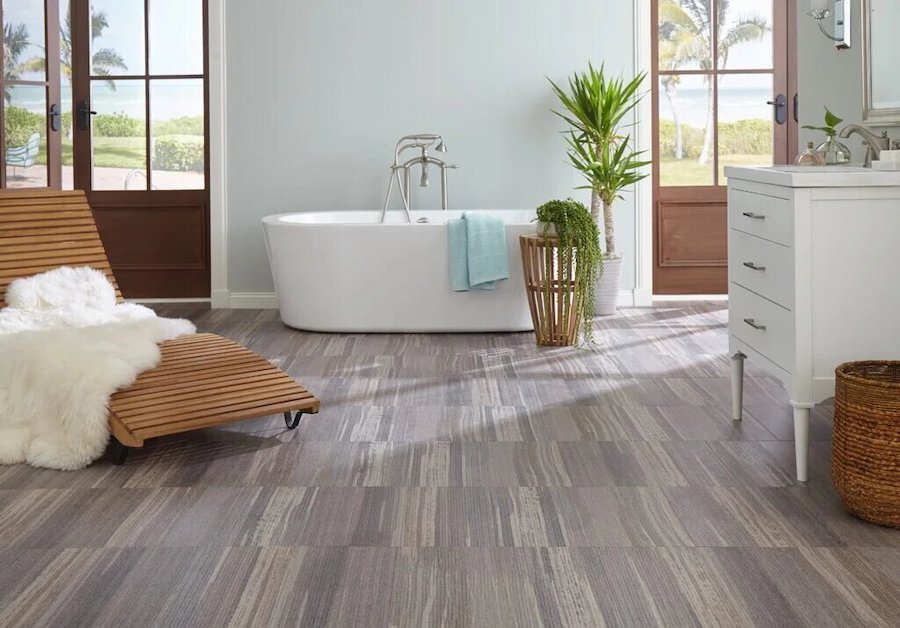
Choosing the right flooring for your bathroom is essential for both safety and style. Bathrooms are naturally prone to moisture, which can make floors slippery and hazardous. That’s why slip resistant vinyl bathroom flooring has become a popular choice among homeowners and renovators. It offers a practical solution that combines water resistance, comfort underfoot, and a wide variety of design options—all while reducing the risk of slips and falls.
In this guide, we’ll break down the different types of non-slip vinyl flooring for bathrooms, what features to look for, and how these options compare to other materials. We’ll also share expert tips on installation, care, and how to select the best product for your needs and budget.
If you’re still exploring your choices, the bathroom flooring buyer’s guide provides a comprehensive overview of materials, durability, and cost factors to help you make an informed decision.
Why Choose Non-Slip Vinyl for Bathrooms?
Bathrooms are one of the most accident-prone areas in a home due to frequent water exposure. Slip resistant vinyl bathroom flooring is engineered with textured surfaces or special coatings that provide extra grip, even when wet. Here’s why it stands out:
- Waterproof and Moisture-Resistant: Vinyl is inherently water-resistant, making it ideal for bathrooms where spills and splashes are common.
- Comfortable Underfoot: Unlike tile or stone, vinyl feels warmer and softer, which is especially welcome in colder climates.
- Easy to Clean: Vinyl’s smooth surface makes it simple to wipe away dirt, soap scum, and water spots.
- Affordable: Compared to ceramic, porcelain, or natural stone, vinyl is generally more budget-friendly and easier to install.
- Wide Range of Styles: Modern vinyl comes in a variety of colors, patterns, and textures, including realistic wood and stone looks.
For those seeking the most affordable bathroom flooring, vinyl is often at the top of the list. You can learn more about cost-effective options by visiting the most affordable bathroom flooring resource.
Top Types of Slip-Resistant Vinyl Flooring
There are several types of vinyl flooring suitable for bathrooms, each offering unique benefits in terms of safety, appearance, and installation method. Let’s look at the most popular options:
Textured Vinyl Planks
Luxury vinyl planks (LVP) are designed to mimic the look of hardwood while providing a textured surface for added traction. Many brands offer planks with embossed or patterned finishes that help prevent slipping, even in wet conditions. These planks are easy to install, often using a click-lock or adhesive system, and can be cut to fit any space.
Non-Slip Vinyl Tiles
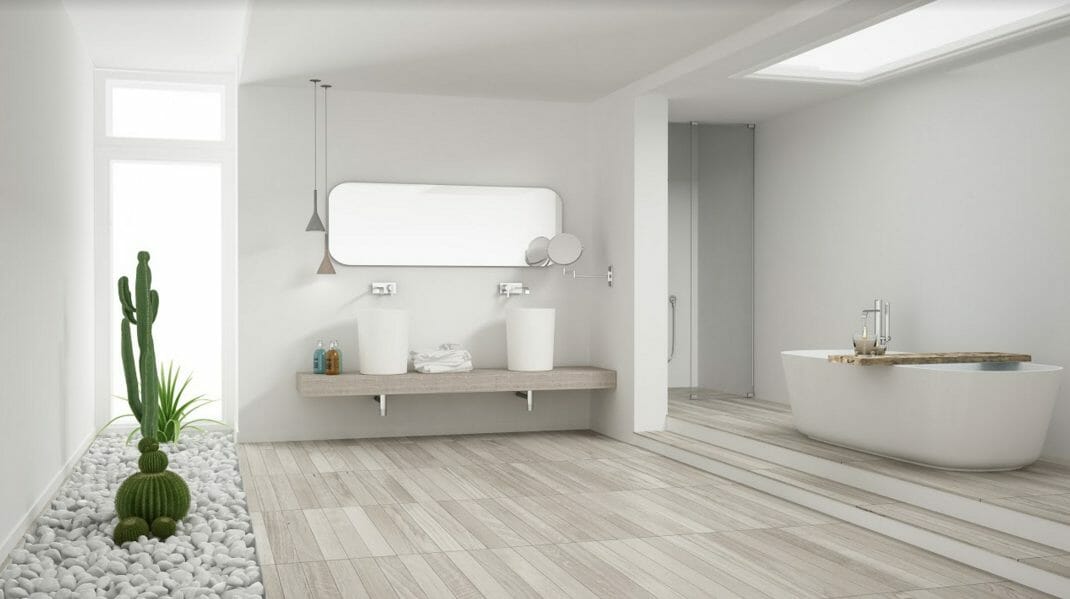
Vinyl tiles are another excellent choice for bathrooms. Many manufacturers produce tiles with anti-slip coatings or micro-textured surfaces that enhance grip. These tiles can be arranged in various patterns, allowing for creative designs while maintaining safety. They’re also easy to replace individually if damaged.
Sheet Vinyl with Anti-Slip Finish
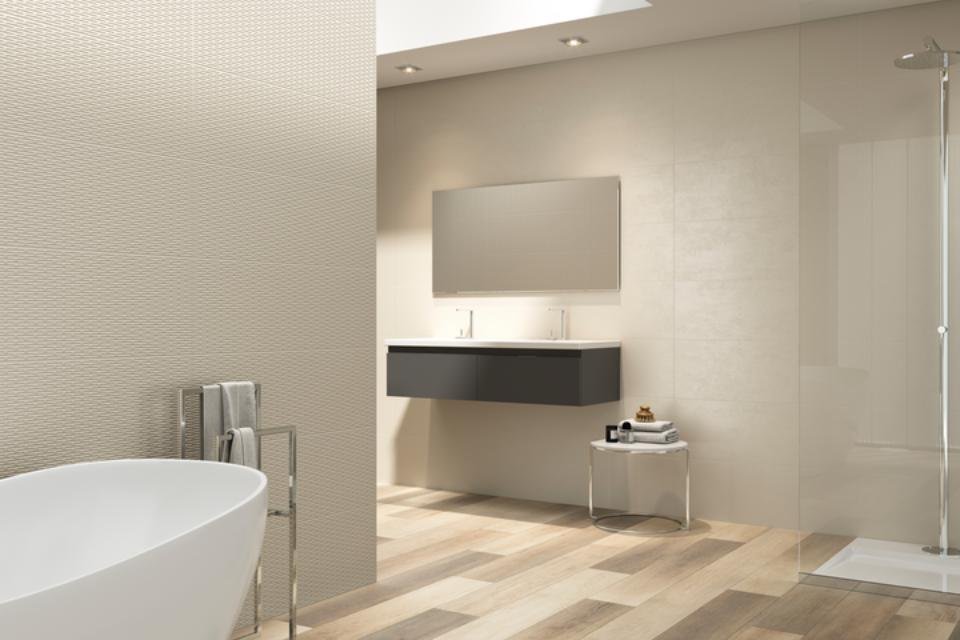
Sheet vinyl is a continuous roll of flooring that can be cut to fit the exact dimensions of your bathroom. Many modern sheet vinyl products are designed with a slip-resistant wear layer, making them a safe and seamless option for wet areas. This type of flooring is especially useful in bathrooms with odd shapes or where minimizing seams is important to prevent water infiltration.
Key Features to Look For
When shopping for slip-resistant vinyl bathroom flooring, keep the following features in mind to ensure you get the best combination of safety, style, and durability:
- Slip Resistance Rating: Look for products that specify a slip resistance or anti-slip rating. Some manufacturers use the R-value system (R9–R13), with higher numbers indicating better slip resistance.
- Textured Surface: Embossed or patterned finishes provide more grip than smooth surfaces.
- Waterproof Construction: Ensure the product is rated for high-moisture environments.
- Easy Maintenance: Choose vinyl that resists stains and is simple to clean with regular household products.
- Warranty: A good warranty can offer peace of mind regarding wear, fading, and water damage.
For those considering updating their color scheme, the best neutral bathroom flooring colors guide offers inspiration on timeless and versatile shades that work well with vinyl products.
Installation Tips for Safe Bathroom Floors
Proper installation is crucial for maximizing the safety and longevity of your new floor. Here are some best practices for installing non-slip vinyl in bathrooms:
- Prepare the Subfloor: Make sure the surface is clean, dry, and level. Any bumps or dips can affect the vinyl’s performance and appearance.
- Seal Seams and Edges: Use waterproof adhesive and sealant to prevent moisture from seeping underneath the flooring.
- Follow Manufacturer Instructions: Each product may have specific installation requirements, especially for click-lock or peel-and-stick systems.
- Consider Professional Help: While many vinyl products are DIY-friendly, hiring a professional can ensure a watertight, long-lasting result.
If you’re thinking about updating your existing bathroom, you might find the layering vinyl over tile in bathroom guide helpful for step-by-step advice on installing new flooring over old surfaces.
Comparing Vinyl to Other Bathroom Flooring Materials
While vinyl is a top choice for safety and affordability, it’s worth comparing it to other common bathroom flooring materials:
| Material | Slip Resistance | Water Resistance | Comfort | Cost |
|---|---|---|---|---|
| Vinyl (Plank/Tile/Sheet) | High (with textured/anti-slip finish) | Excellent | Soft/Warm | Low–Moderate |
| Ceramic/Porcelain Tile | Moderate (unless textured) | Excellent | Hard/Cold | Moderate–High |
| Natural Stone | Varies (can be slippery) | Good | Hard/Cold | High |
| Laminates | Low (not recommended for wet areas) | Poor | Soft | Low |
For more details on how long different bathroom flooring materials last, check out the how long does bathroom flooring last article.
If you’d like a broader perspective on the best flooring for bathrooms, including pros and cons of each type, see this comprehensive bathroom flooring comparison from a trusted home improvement resource.
Care and Maintenance Tips
Maintaining your slip resistant vinyl bathroom flooring is straightforward. Here are some tips to keep it looking and performing its best:
- Sweep or vacuum regularly to remove dust and debris.
- Wipe up spills promptly to prevent stains and moisture buildup.
- Use a damp mop with a mild cleaner—avoid harsh chemicals or abrasive scrubbers.
- Place mats at entry points to catch water and reduce wear.
- Check seams and edges periodically for signs of lifting or water intrusion.
Frequently Asked Questions
Is vinyl flooring safe for bathrooms prone to moisture?
Yes, vinyl is one of the most water-resistant flooring options available. When installed correctly, it forms a waterproof barrier that protects the subfloor from moisture damage, making it ideal for bathrooms.
How do I know if a vinyl floor is truly slip-resistant?
Look for products labeled as “anti-slip” or with a slip resistance rating (such as R10 or higher). Textured surfaces and matte finishes generally provide better traction than smooth, glossy vinyl.
Can I install slip-resistant vinyl over existing tile?
In many cases, yes. As long as the existing tile is level, clean, and in good condition, vinyl planks or tiles can be installed directly over it. For detailed instructions, refer to the layering vinyl over tile in bathroom guide.
How long does slip-resistant vinyl flooring last in a bathroom?
With proper care and installation, quality vinyl flooring can last 10–20 years or more in a bathroom setting. Factors such as product quality, foot traffic, and maintenance routines will affect longevity.
Are there stylish options for non-slip vinyl in modern bathrooms?
Absolutely. Today’s vinyl flooring comes in a wide range of colors, patterns, and textures—including realistic wood and stone looks—so you can achieve both safety and style in your bathroom design.